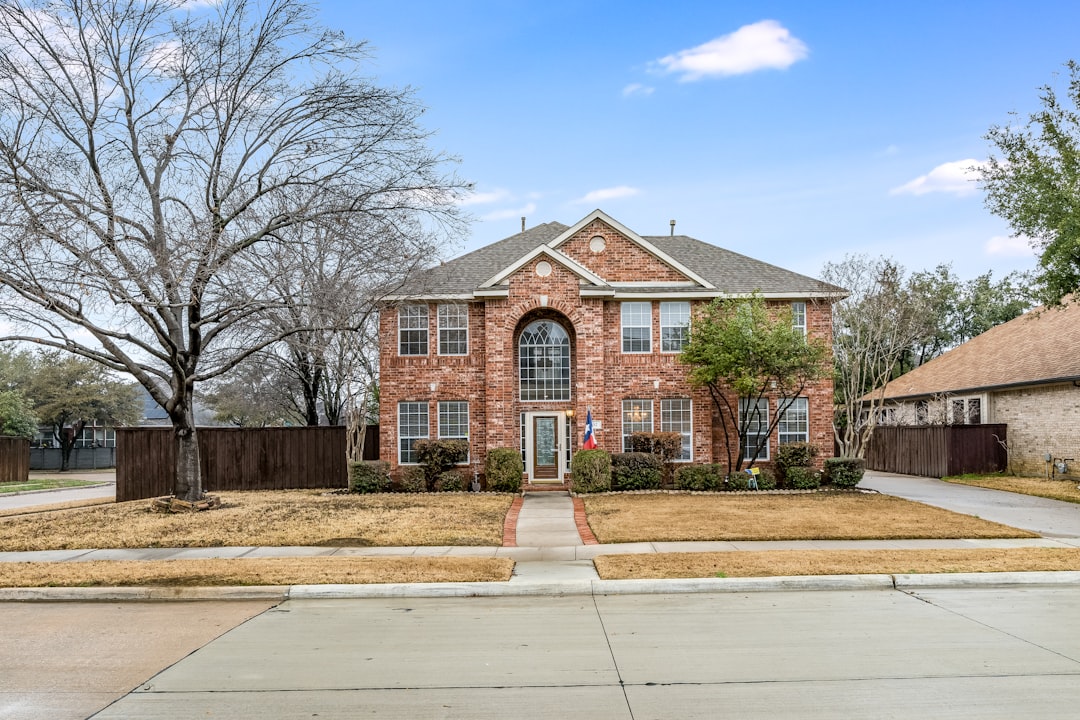
There’s a new subdivision going up just off William Cannon on the southwest side — the kind with a big banner promising “Move-In Ready Homes From The $390s” — and I’ve driven past it probably a dozen times over the last few months. The same four finished houses have been sitting there since early spring. Nobody’s moving in. The driveways are empty, the landscaping is starting to look a little too tidy in that way that says nobody actually lives here.
That’s not a one-subdivision problem. That’s a signal.
Builders across Texas are sitting on more completed, unsold inventory than they were this time last year, and the math is getting harder to make work. When you’re a builder, a finished house that doesn’t sell stops being an asset and starts being a bill — carrying costs, insurance, property taxes, and a loan that doesn’t care whether you’ve got a buyer.
What “Rising Completed Inventory” Actually Means on the Ground
When analysts say completed inventory is rising, they mean houses that are fully built, CO in hand, just… waiting. Not under contract. Not framed and six weeks from done. Sitting there, ready to move into.
In the DFW suburbs I know — places like Mansfield, Forney, and some of the newer sections pushing out past Burleson — I’ve been noticing more flags, more incentive signage, more “ask about our rate buydown” tent cards at the entrance. That’s not a coincidence. Those are builders trying to move product that isn’t moving on its own.
Somewhere around six months of supply in completed new construction is where builders start to get genuinely uncomfortable. Some Texas metros are pushing toward that range, give or take, depending on the submarket and price tier. The entry-level stuff below $350,000 is tightest — there’s almost nothing there and what exists gets absorbed fast. The mid-$400s to $550s range is where inventory is stacking up. That’s the segment builders went heaviest on during the rate spike, betting that rates would come down faster than they did.
They haven’t. Not meaningfully. And buyers who were waiting on a rate drop are still waiting.
The Incentive Spiral Builders Are Trying to Avoid
Here’s the thing about builder incentives: once your neighbor starts doing 4.99% buydowns and $15,000 toward closing costs, you almost have to match it or your spec home sits longer. It becomes a race that’s hard to exit cleanly.
I’ve watched this play out in a couple of the master-planned communities along Highway 183 in the Cedar Park area and out on 620 near Lakeline — builders who started with modest incentives a year ago are now stacking them: rate locks, free appliance packages, upgrades bundled in at no charge. That’s real margin compression.
The builders most exposed right now tend to share a few traits:
- Heavy on spec starts relative to presales (meaning they built first and hoped buyers would follow)
- Concentrated in the $420,000–$560,000 bracket, which is exactly where rate sensitivity is sharpest
- Operating in outer-ring suburbs where land was cheap but commute friction is real
- Facing resale competition from homeowners who bought 2019–2021 and can now price below new construction to get out
That last one is underappreciated. A resale home in a good school zone at $430,000 with a new roof and updated kitchen is competing directly with a $465,000 spec home on a slab with no trees. For a lot of buyers, that’s not even close.
What Builders Are Actually Doing About It
The smarter operators are doing a few things to get ahead of the inventory math. Some are slowing starts — essentially pumping the brakes on new construction to let the completed supply drain. That’s painful short-term but it keeps them from digging deeper.
Others are getting creative about floor plans and price points. I wrote about how some builders are redesigning for payment math rather than list price — smaller square footage, fewer option packages, simpler elevations — because $2,400 a month feels different to a buyer than $472,500 does on a sign. That shift is accelerating now.
A few are pivoting toward the move-up segment, which is interesting. Meritage’s Q2 2026 earnings hinted at exactly this — moving away from entry-level new construction and chasing buyers who already have equity to roll. Whether that’s the right call or just shifting the problem up a price tier, I’m not sure yet.
And there’s the land question. Builders who bought lots at 2021–2022 prices are stuck with that cost basis whether they build or not. The ones who were more conservative about land acquisition — or who are looking at infill and listed lots in denser urban areas — have a little more flexibility right now.
The Affordability Ceiling That Isn’t Moving
The core tension is this: building costs haven’t dropped enough to offset where rates are, and buyers have a ceiling. Most households shopping for a new home in Austin or DFW have a payment ceiling somewhere in the $2,200–$2,600 range — that’s not a guess, that’s what comes back when you talk to lenders about qualification. At a 7% rate, that ceiling translates to a purchase price in the low-to-mid $300,000s for many buyers. Builders aren’t building much at that price, because they can’t make it pencil.
So you’ve got a mismatch: inventory building up in the range buyers can’t quite reach, and almost nothing in the range buyers can actually afford. That’s a slow leak in the market, not a crisis, but it’s real.
What to Actually Do With This Information If You’re Buying New Construction Right Now
If you’re in the market for a new build, this environment is genuinely useful for you as a buyer — more than any time in the past three or four years. Here’s how I’d think about it:
- Ask specifically about completed inventory — not what they can build, but what’s done and sitting. Those sellers have more motivation.
- Negotiate the incentives, not just the price. Builders are often more flexible on rate buydowns and closing costs than on list price (protecting comps matters to them).
- Compare directly with resale. A resale home in a walkable neighborhood with established trees may still beat the spec home math, especially if the new build is in an outer suburb with limited services.
- Get your own inspection. New construction doesn’t mean no problems — I wouldn’t skip an inspector on a spec home any more than I would on a 1970s ranch.
- Watch how long individual specs have been sitting. Anything over 90 days with no price movement is a builder who’s about to get a lot more flexible.
The driveways on William Cannon aren’t going to be empty forever. But right now, time is working in the buyer’s favor out there. Use it.