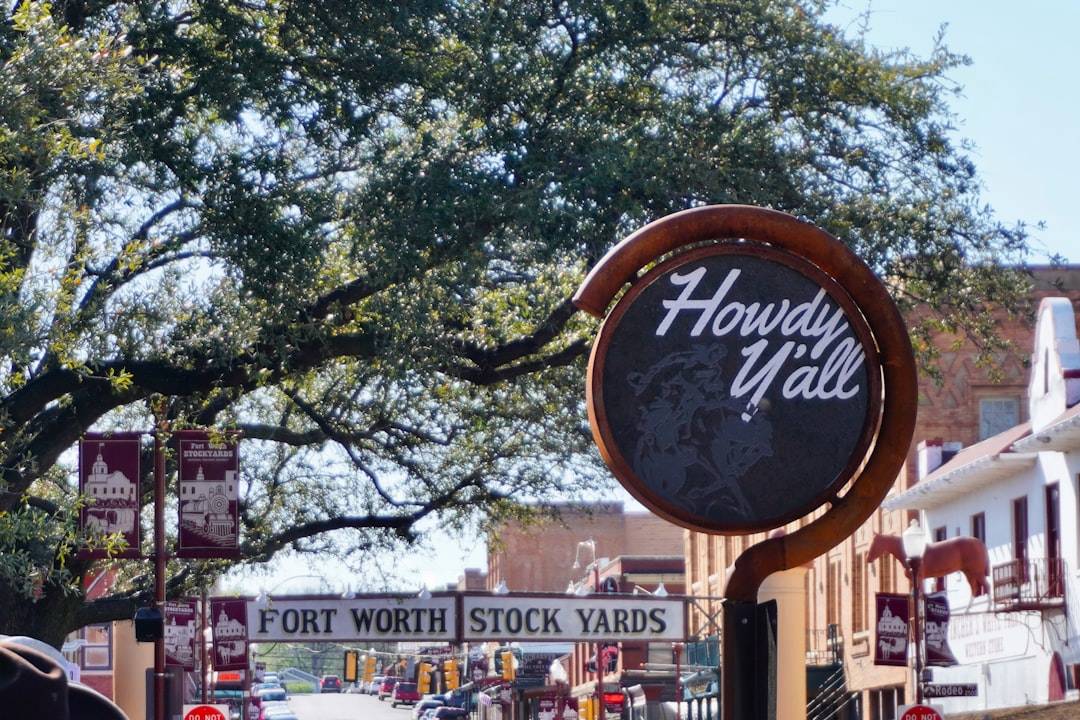
Growing up outside Fort Worth, the growth always seemed to move in one direction. East toward Arlington, east toward Grand Prairie, eventually swallowing up everything between here and Dallas until you couldn’t tell where one city ended and the other began. That was the story for decades.
Something has shifted.
The next wave isn’t pushing toward Dallas. It’s pushing the other direction — west and southwest of Fort Worth, out toward Parker County, into Weatherford, down toward Aledo and Willow Park, with whispers starting up around Granbury. If you’ve driven FM 1187 lately or cut through Hudson Oaks on a weekday morning, you’ve already seen the evidence: new subdivisions stacked against old ranch land, concrete trucks kicking up caliche dust, and those temporary real estate signs that go up before the model home does.
Why West, Why Now
Part of it is simple math. The land east of Fort Worth is largely spoken for. What’s left costs more to assemble, and a lot of it sits in established municipalities with slower permitting. West of Fort Worth, especially once you cross into Parker County, you’re still dealing with large tracts, lower land cost per acre, and county land that can be developed without fighting a city planning department for two years.
The other piece is infrastructure finally catching up. The Chisholm Trail Parkway — which, when I was younger, didn’t extend anywhere near as far as it does now — changed the calculus for Aledo and the areas flanking it. Commute times into downtown Fort Worth from, say, Aledo proper are manageable in a way they weren’t before that corridor opened up. That matters enormously to the buyer pool these builders are chasing.
And then there’s the school district factor. Aledo ISD has been drawing families from all over Tarrant County for years now. That reputation doesn’t fade quickly, and builders know it.
What’s Actually Being Built Out There
The product mix is interesting to me, and it’s worth paying attention to if you’re a buyer comparing options.
Out near Weatherford and Willow Park, you’re seeing a lot of:
- Entry-level and move-up product in the $320,000–$420,000 range, give or take, which is lower than what comparable new construction runs inside Loop 820
- Larger lots — a quarter acre is not unusual, and half-acre lots show up in some communities that would price you out entirely closer to the city
- More spec inventory than you’d see from the same builders in tighter submarkets, which means you’re not always waiting six months for a home to be finished
Closer to Aledo and the FM 1187 corridor, the price points creep up. You’re looking at $400,000 to $550,000 fairly commonly for a four-bedroom with decent finishes, and some of the estate sections run well past that. The builders working that corridor are betting heavily on the school district premium holding.
I’d also note that M/I and Meritage have both been active in this general stretch of Tarrant and Parker County — their recent bridge financing activity in a Texas growth market suggests these aren’t speculative land plays, these are companies committing capital with a long horizon in mind.
The Affordability Question Is Real
I want to be honest here, because I’ve watched this pattern play out before. New construction west of Fort Worth looks affordable compared to Southlake or Trophy Club. Relative to the DFW metro, the price tags feel reasonable. But “affordable” is doing a lot of work in that sentence.
Property tax rates in Parker County have historically run somewhere around 1.6–1.9% depending on the specific MUD or taxing entity — and new developments often layer in Municipal Utility District debt that bumps your effective rate higher in the early years. On a $380,000 home, that can add up to $6,000–$7,000 a year in property taxes before you’ve paid a dollar of principal. DFW affordability slipping even as builders report strength isn’t an abstract data point — it’s the lived experience of buyers who ran the numbers on sticker price and got surprised at closing.
Ask for the MUD disclosure. Ask what the tax rate is projected to be once the district is fully built out. Don’t assume the rate you see advertised reflects what you’ll actually pay.
What the Lot Supply Picture Looks Like
Builders in this corridor aren’t scrambling for lots the way they are in some infill markets. The listed lot inventory situation for builders looks very different in Parker County than it does inside the city — there’s still raw land available at prices that support profitable construction, which is precisely why the activity is concentrating here right now.
Red Flags I’d Watch For
Not every subdivision breaking ground west of Fort Worth is a good bet for a buyer. A few things I’d keep my eye on:
- Absorption pace. If a community has been selling for eighteen months and still has a lot of unsold inventory, find out why. Sometimes it’s the builder. Sometimes it’s something about that specific location — a highway that’s louder than expected, a commercial development planned next door.
- Commute reality vs. commute assumption. I’d drive the route to your actual workplace at 7:45 a.m. on a Tuesday before you sign anything. Chisholm Trail helps, but it’s not magic, and some of these communities are farther from the on-ramp than the marketing materials imply.
- Builder warranty and construction quality. Spec homes built fast in a hot land market don’t always have the same oversight as a build-to-order. Get your own inspector. Don’t rely on the builder’s walkthrough alone.
- Water supply infrastructure. Parker County is still largely rural in character, and not every new development is on city water from day one. Ask directly.
What to Do If You’re Seriously Looking Out There
Go drive it in person. I mean that literally — take FM 1187 from Aledo south toward Cresson, then cut over to Weatherford on Highway 180, then come back through Willow Park. You’ll get a feel for the geography, the distances, and honestly just how much land is still out there waiting.
Talk to a local lender who knows Parker County MUD structures, not just a big national platform that’s going to hand you a rate quote without understanding the tax load. And when you’re ready to make an offer on new construction, remember that the builder’s agent represents the builder — having someone in your corner who knows how to read a builder contract matters more than people realize.
This growth wave is early enough that you still have options and negotiating room. That window doesn’t stay open forever out here. I’ve watched it close before.