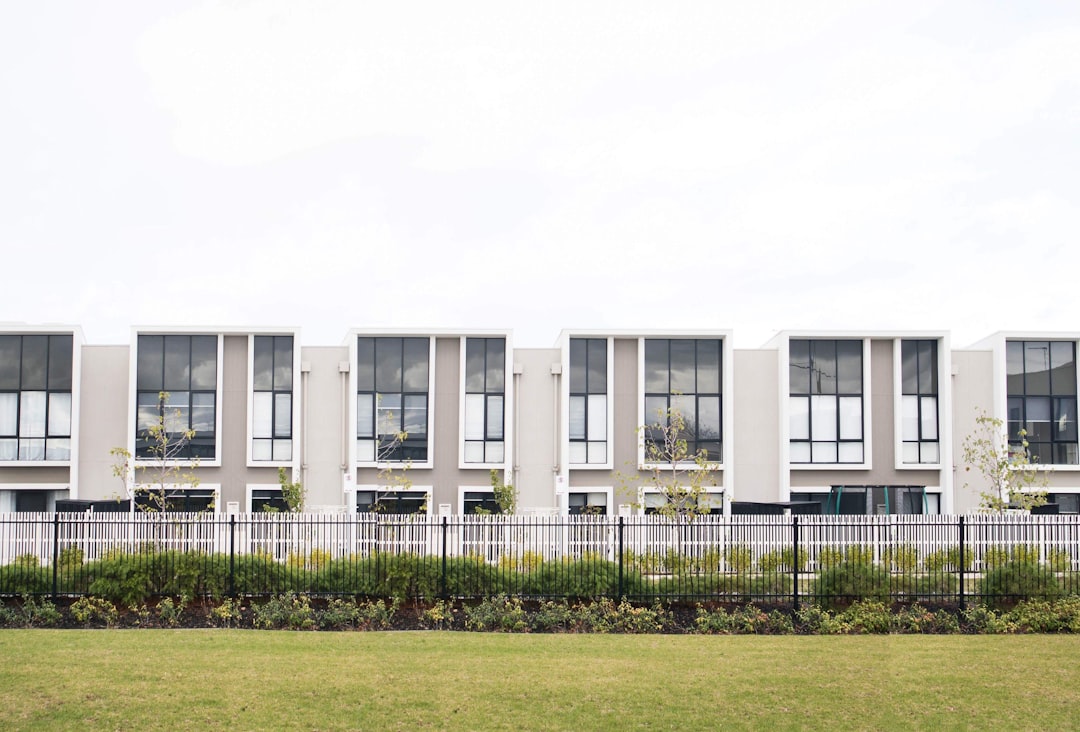
A few years back, the ranch house three doors down from me got scraped. Gone in a weekend. By the following spring there were two side-by-side units on the lot, each of them taller than anything else on the block, with those skinny little balconies that look like an afterthought. I watched the whole thing happen from my front porch. And I waited to see what they’d list for.
They came in at $575,000 a side.
I tell that story because I keep hearing a version of the same argument — that if cities just allow more duplexes and townhomes, housing gets more affordable. I believed a version of that for a while myself. But after watching it play out in East Austin, and reading listings across Houston’s Inner Loop and parts of Fort Worth’s near-southside, I’ve started pushing back on the assumption. Density doesn’t automatically mean cheaper. Sometimes it means the opposite.
Why the Math Doesn’t Work the Way People Expect
Here’s the thing about a duplex replacing a single-family house in an already-appreciating neighborhood: the land cost doesn’t go away. The developer splits it across two units instead of one, sure. But in a place like the 78702 or the Montrose area, land isn’t cheap. You’re already starting from a high baseline before you pour a single yard of concrete.
Construction costs compound that. Lumber, labor, permitting — none of it got cheaper after 2020, and as of the last couple of years it hasn’t meaningfully come back down either. I’ve talked to small-scale builders in Austin who say they can’t pencil out a new duplex for under $250 a square foot, and that’s on the low end depending on finishes. When you add land acquisition and holding costs, both units in a two-family build often have to list somewhere north of $450,000 to make the numbers work for the developer. That’s not affordable housing. That’s two expensive houses sharing a wall.
Townhomes follow a similar logic. The ones going up along East 12th and in the blocks around Webberville Road are not targeting first-time buyers on teacher salaries. They’re targeting people who are priced out of the detached single-family market but still have solid household incomes and can qualify for a $400,000 to $550,000 mortgage. Which is a real need! I’m not saying those buyers don’t deserve options. But it’s different from what gets promised when people talk about density as an affordability solution.
The Neighborhoods Where This Plays Out Most Clearly
Look at what happened in Houston’s Midtown and the blocks just south of Montrose over the past decade. The old bungalows and shotgun houses that used to house renters at $900 a month got torn down for townhome rows. The townhomes started listing at $350,000 and are now somewhere around $425,000 to $500,000 in a lot of those corridors, give or take. Net result: more units on the lot, higher price per unit, and the original renters are living somewhere else.
Austin did the same thing along Cesar Chavez and the East 6th corridor. The density is real. The affordability is not.
A few things worth keeping in mind when you’re evaluating a new-construction duplex or townhome listing:
- HOA fees can be significant. Townhome communities especially tend to carry monthly fees that add $200 to $400 to your effective housing cost — sometimes more if there’s a pool or structured parking.
- Tax assessments reset quickly on new builds. Your first year might look reasonable, but Travis County and Harris County will reassess at market value fast. Budget for it.
- Financing on attached units can get complicated. Some lenders apply stricter qualifying ratios for condos and townhomes depending on the community’s owner-occupancy ratio. Worth knowing before you’re in contract. And since rates are still doing what they’re doing, it pays to understand the broader picture — I wrote about that a bit here.
What “Affordable” Actually Requires
Genuine affordability in new construction usually needs some combination of subsidized land, public financing, deed restrictions, or nonprofit development. Private market duplexes and townhomes in desirable urban cores don’t typically have any of those things. They’re built to sell at whatever the market will bear, because that’s how the developer recoups the cost and makes a margin.
That’s not cynicism — it’s just how the math works when land is expensive and construction costs are high and carrying costs accumulate over an 18-month build timeline.
The neighborhoods where I’ve seen new attached construction actually hit something closer to affordable tend to be farther out. Parts of Pflugerville. Some of the older suburbs southeast of Fort Worth proper. Places where land is still cheap enough that a builder can deliver a finished unit in the low $300s and still make money. But those markets also come with longer commutes, different school zones, and sometimes infrastructure that hasn’t caught up to the growth.
Before You Buy Into the “More Density = Cheaper” Story
If you’re a buyer who’s been told that townhomes and duplexes are the affordable middle ground, do your own math before you fall in love with a listing. Pull the comparable sales on detached homes in the same zip code. Look at what the HOA adds to the monthly payment. Check when the last assessment happened and what the taxable value jumped to.
And if you’re already a homeowner thinking about what this kind of infill development does to your own equity picture, it’s worth paying attention to how the neighborhood is shifting — not just for resale, but for what repairs and improvements actually make sense to invest in before you list.
The duplex on my street rented both units within a month, by the way. At $2,800 a month each. Nobody got a deal.