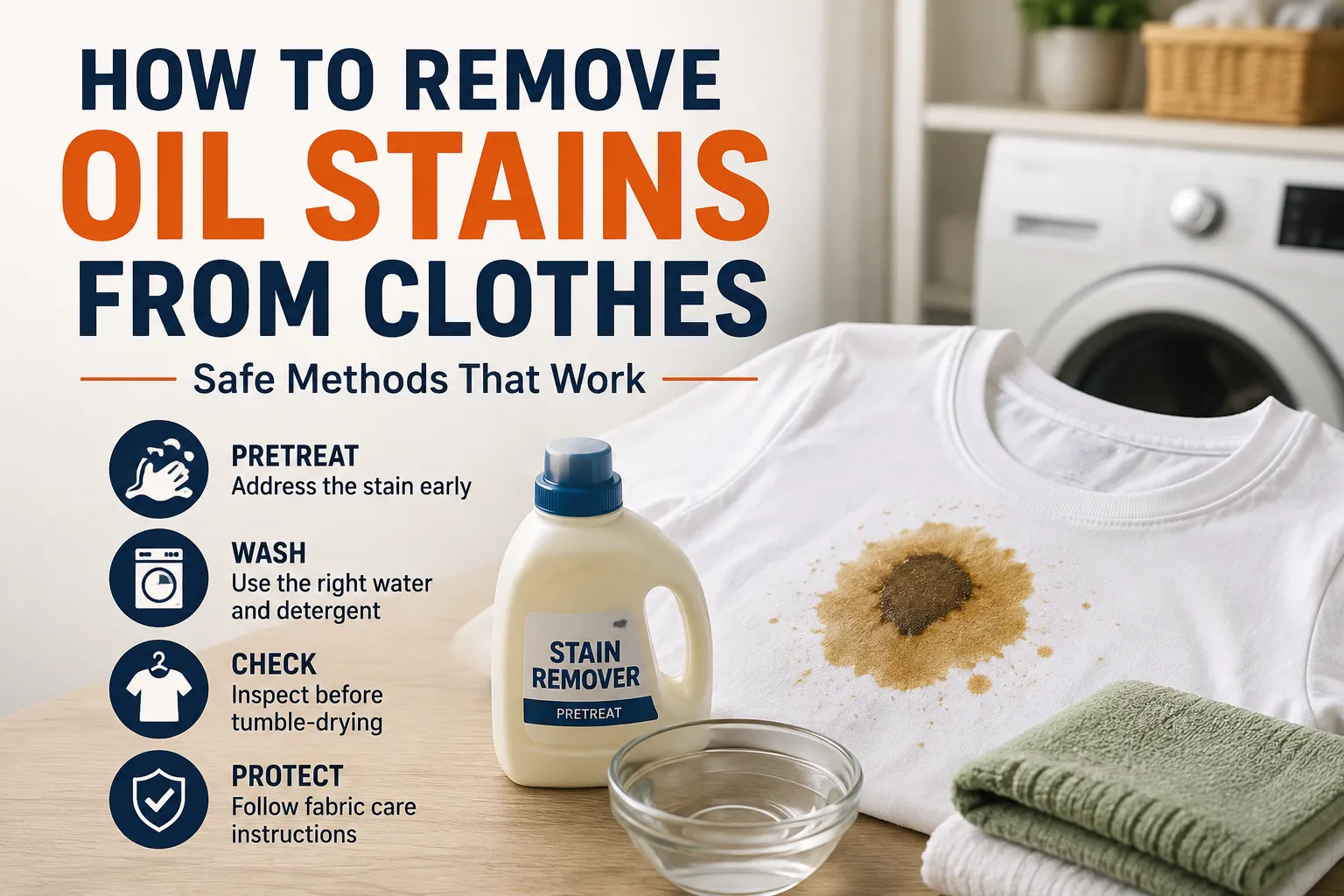
Oil stains respond best when you treat the marked area before sending the garment through a normal wash: remove any excess oil, use a suitable pretreatment, wash according to the garment’s care instructions, and check the fabric before tumble-drying it.
The right method depends on both the material and the stain’s history. A fresh cooking-oil splash on a washable T-shirt is simpler to handle than a mark that has already been washed and dried. Start by identifying which situation you have rather than reaching for the strongest cleaner available.
Check the Garment Before Treating the Stain
Read the care label before you begin. In the United States, care labels provide instructions for regular washing, drying, or dry-cleaning, but they do not replace the directions on a stain-removal product. Use both: the garment label sets the limits for routine care, while the cleaner’s label tells you how that product should be applied.
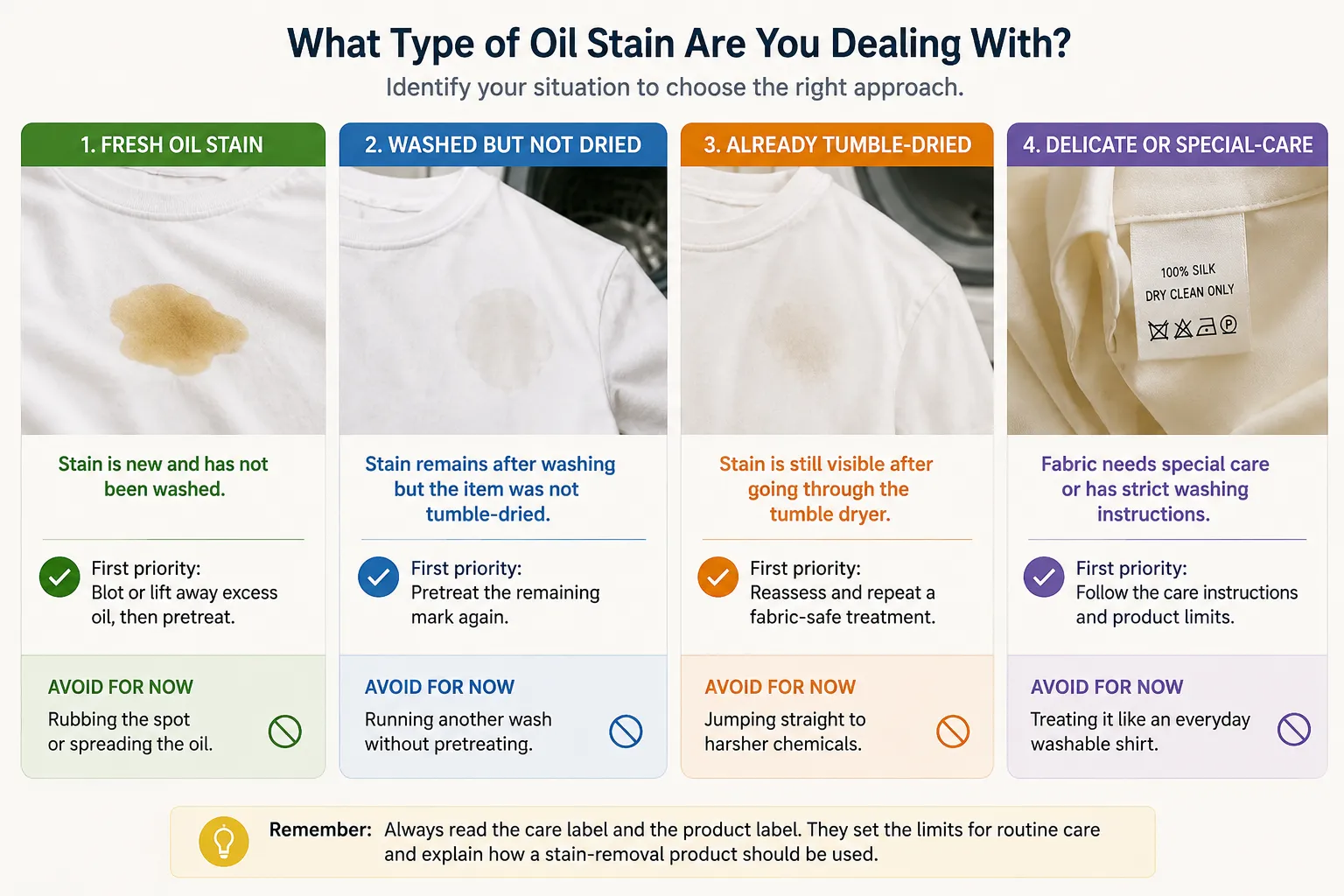
Then look at the stain itself. Is there still liquid oil on the surface? Has the item already been washed? Did it go through a tumble dryer? Dryer heat can set a remaining stain, so a mark found after drying may take more than one treatment.
Use the situation to choose your starting point:
| Situation | First priority | Avoid for now |
|---|---|---|
| Fresh oil or grease | Blot or lift away the excess, then pretreat | Rubbing the spot outward |
| Washed but not dried | Pretreat the remaining mark again | Running another untreated wash |
| Already tumble-dried | Reassess and repeat a fabric-safe treatment | Jumping straight to harsher chemicals |
| Delicate or special-care item | Follow the care instructions and product limits | Treating it like an everyday washable shirt |
These steps are intended for common food oils, cooking grease, and similar oily marks on clothing; motor oil, oil-based paint, fuel, or solvent contamination can involve different products and safety considerations.
How to Remove a Fresh Oil Stain
For an ordinary washable garment, one controlled treatment is a better starting point than layering several household remedies. Liquid laundry detergent and prewash stain removers are commonly used on greasy or oily soils; follow the directions for the product you choose.
-
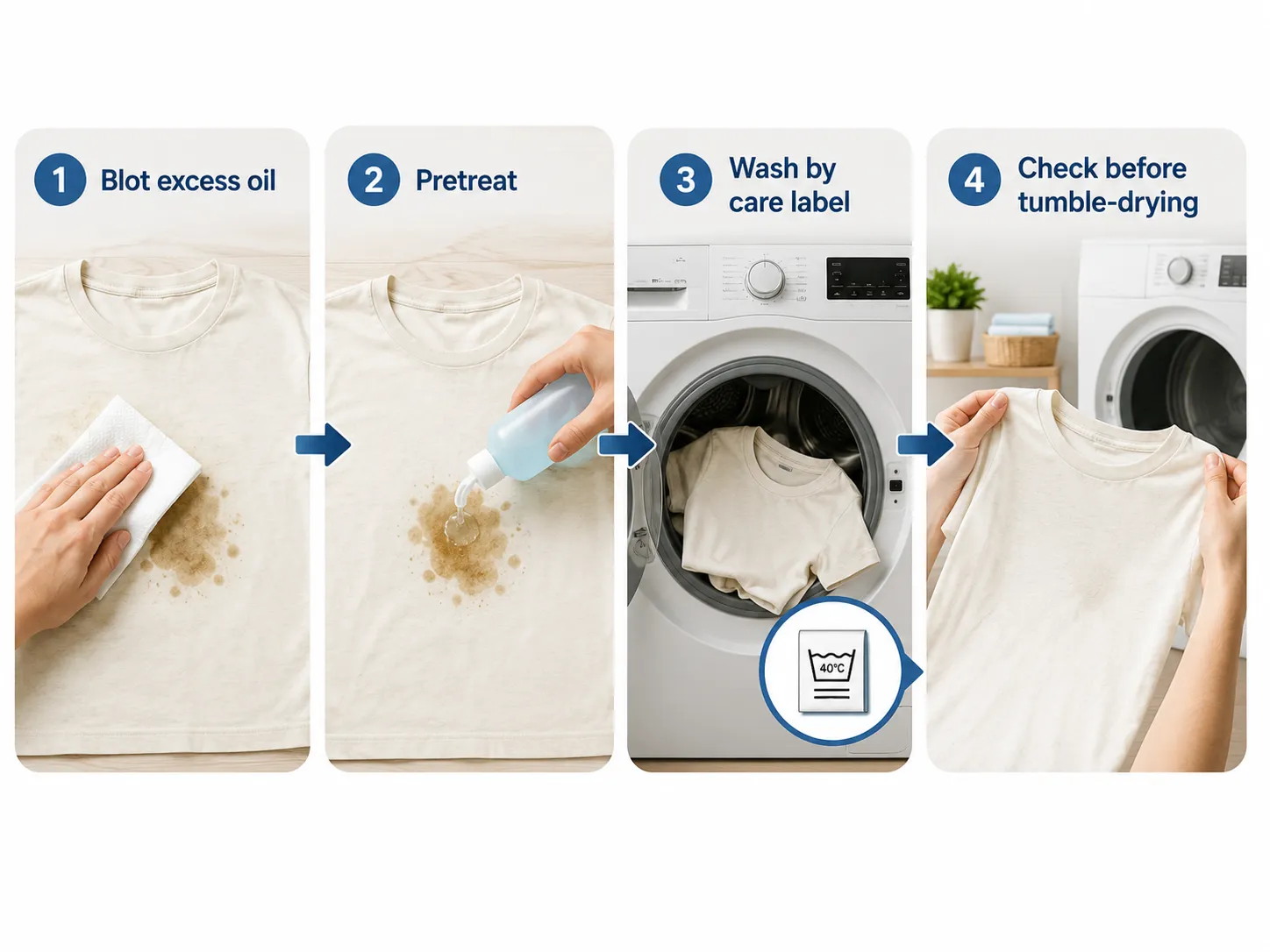
Remove what is sitting on the surface. Blot liquid oil with a clean cloth or paper towel. If greasy food is attached to the fabric, lift it away gently with a dull spoon or similar edge. Do not scrub the spot back and forth.
-
Pretreat the marked area. Apply a prewash stain remover or liquid laundry detergent according to its label. If you are using an unfamiliar product, test it first on an inconspicuous part of the garment when the directions recommend a colorfastness check.
-
Let the product work for the stated time. There is no useful universal waiting period for every detergent, stain remover, and fabric. Use the timing on the product label instead of leaving a treatment on longer in the hope that it will work better.
-
Wash within the garment’s care limits. For greasy and oily stains, use the hottest water that is safe for the fabric. The washing instructions on the care label determine what “safe” means for that item.
-
Check before using a tumble dryer. Inspect the area after washing. If an oily shadow or discoloration remains, pretreat the spot again rather than exposing the remaining stain to dryer heat.
For a small food-grease spot, a little dish soap can also be used as a spot treatment. Keep dishwashing liquid out of an automatic washer, where its high-sudsing formula is not intended to be used as laundry detergent. Use it only on the spot, then continue with an appropriate laundry pretreatment and wash.
Avoid combining several cleaners unless their labels specifically allow it. Starting with one suitable treatment makes it easier to judge whether the stain is improving and reduces the chance of putting incompatible or unnecessarily harsh products on the same piece of fabric.
If the Stain Has Already Been Washed or Dried
Once a garment has been washed, there may be little or no loose oil left to blot. The job shifts from removing surface residue to treating whatever mark remains in the fibers.
Apply an appropriate prewash stain remover or liquid laundry detergent to the stained section. Follow the product directions, then wash the item again according to its care label. If the mark becomes lighter but is still visible, another permitted round of the same treatment may be more sensible than immediately changing to a stronger chemical.
A garment that has already been tumble-dried can be more difficult because heat can set a remaining stain. That does not mean the item is automatically ruined. Reassess the fabric, repeat a treatment that is suitable for it, and keep the garment out of the tumble dryer while the mark is still visible.
Old stains sometimes need more than one attempt, and some will not disappear completely. Stop escalating the treatment if the material begins to fade, change texture, distort, or show another sign of damage.
Adjust the Method for Delicate or Special-Care Fabrics
Wool, silk, embellished garments, unstable dyes, and items with restricted care instructions should not automatically receive the same treatment as sturdy cotton or polyester. Check the label for washing and drying limits before applying a home method.
A hidden-area test is useful when a product’s directions call for checking colorfastness. Apply only the recommended amount to an inconspicuous seam or interior area, then look for color transfer or a visible change in the material before treating the stain itself.
If the label calls for dry-cleaning, or you are unsure how a valuable or delicate material will react, professional cleaning may be the safer next step. Tell the cleaner what caused the stain if you know and mention any detergent, stain remover, or other product already applied to it.
The goal is not to use the most aggressive treatment the fabric can survive. It is to remove as much of the oily mark as possible without trading a stain for fading, distortion, or surface damage.
If the Oil Mark Is Still Visible
After washing, compare the treated area with the surrounding fabric. If the mark is clearly lighter and the garment shows no adverse reaction, repeat the same approved pretreatment when its instructions allow another application.
If nothing changes after reasonable attempts, or the material starts reacting badly, stop. Adding a succession of stronger household products makes the process harder to control and may create a second problem that is more difficult to correct than the original stain.
This is also the point to reconsider what caused the mark. An unidentified dark patch, paint, machine grease, or contamination from a solvent may not belong in the same treatment category as cooking oil. When the source or fabric is uncertain, professional cleaning is a more controlled option than continued experimentation.
Recheck Before You Dry
Successful oil-stain removal is mostly about making the right decision at each stage. Check the garment’s care limits, treat the stained area before the full wash, and inspect it again before tumble-drying.
If the first attempt improves the mark but does not remove it, repeat an appropriate treatment rather than immediately switching to something harsher. When the fabric reacts badly or the stain falls outside an ordinary food-oil or grease scenario, stop home treatment and choose a method suited to that material and contaminant.
FAQ
Can dish soap remove an oil stain from clothes?
A small amount of dish soap can be used as a spot treatment for some food-grease stains. Apply it only to the stained area rather than using it as laundry detergent in the washing machine, and follow the garment’s care instructions.
Can you remove an oil stain after the clothes have been dried?
It may still be possible, but dryer heat can make a remaining stain harder to remove. Pretreat the mark again with a fabric-safe product, wash according to the care label, and avoid tumble-drying again while the stain is still visible.
Should you use hot or cold water for oil stains?
Use the hottest water that is safe for the garment. Check the care label before washing because the appropriate temperature depends on the fabric and its care requirements.
What should you do with an oil stain on a dry-clean-only garment?
Follow the garment’s care instructions rather than putting it through a normal wash cycle. For a dry-clean-only or delicate item, professional cleaning may be the safer option, especially if you are unsure how the material will react.
How many times can you treat an oil stain?
There is no universal number of treatments. If the stain becomes lighter and the fabric shows no damage, you can repeat an approved pretreatment when its directions allow it. Stop if the material fades, changes texture, or reacts unexpectedly.