Six months after my neighbor’s daughter had her second baby and settled into a house off Gattis School Road in Round Rock, my neighbor — a woman who’d lived on my East Austin block for nearly two decades — started asking me what I knew about the area. She wasn’t being casual about it. She’d already looked at three houses.
That’s the “baby chaser” pattern in one very small story. Adult kids move south for jobs, for space, for lower costs per square foot. Then a baby arrives. Then the grandparents start Googling.
I’ve watched this play out in my own extended circle more than once over the last few years, and lately it feels like it’s accelerating.
What’s Actually Driving the Move
The numbers on Texas growth are not news to anyone who pays attention. What gets talked about less is the second-wave migration — the parents who didn’t choose Texas, exactly, but who chose proximity to their grandchildren and ended up here by extension.
Somewhere around 10,000 to 11,000 people a day were still relocating to Sun Belt states as of recent reporting, and a chunk of that is families following families. New York outflows alone have reshaped parts of the Texas demand picture in ways that weren’t fully predictable five years ago. You add grandparents into that equation and the demand becomes layered — it’s not just young professionals buying starter homes, it’s 60-something couples who own free-and-clear back in Ohio or New Jersey and are moving with real purchasing power.
That purchasing power matters. These buyers are often not rate-sensitive in the same way a first-time buyer is. They can wait out a slow search. And they tend to know what they want: single-story, manageable yard, not a project, close to wherever the grandkids are in school.
Where I’m Seeing It in the Austin Metro
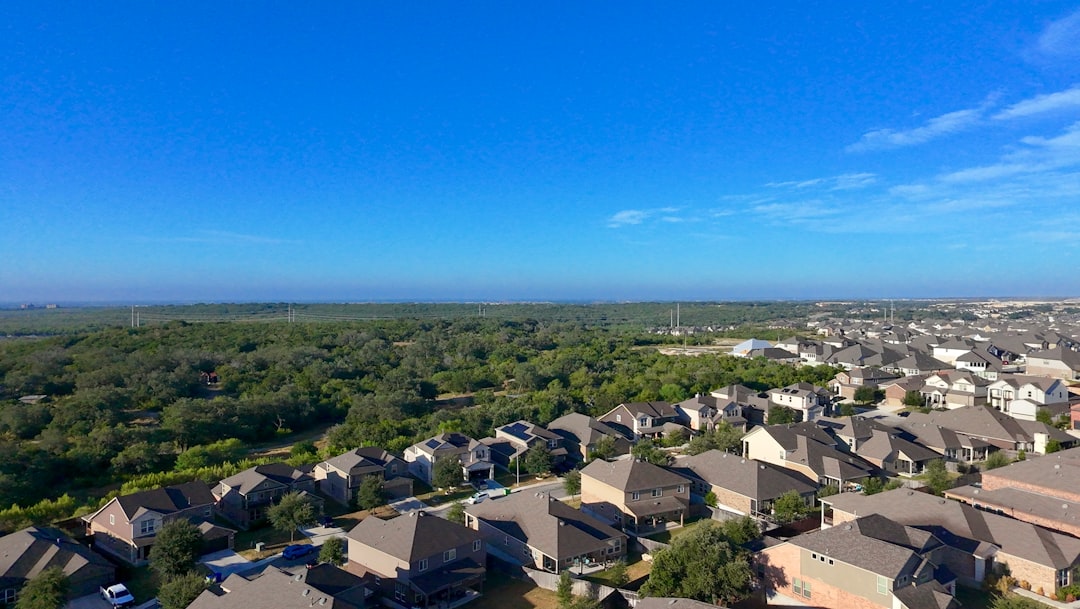
Round Rock is an obvious one — that school district draws families hard, and the grandparents follow. But I’m also hearing about Georgetown, Cedar Park, and parts of Pflugerville that I used to think of as purely starter-home territory. These neighborhoods now have two generations in them, deliberately.
The interesting thing is what these buyers are actually shopping for once they get to Texas:
- Single-story floor plans — this comes up constantly. If you’re 62 with bad knees, stairs aren’t charming
- Proximity to a specific school zone, not just a general area, because the whole point is being close to the grandkids’ actual daily routine
- Low-maintenance exteriors — people who’ve spent forty years maintaining a Victorian in Pennsylvania are often specifically done with that
- At least one dedicated guest room, because the kids will stay over and so will friends visiting from back home
- A garage, which sounds obvious but matters more than buyers sometimes say out loud — it’s about weather, it’s about storage, it’s about feeling like a real house
Price points vary a lot depending on how far out they’re willing to go. In Georgetown or Leander, you can still find something in the $380,000–$450,000 range that checks these boxes. Get closer to the 183 or MoPac corridors and that same house is pushing $550,000 or more, give or take what the market’s doing that week.
The Tax Picture Matters More Than People Expect
Here’s where I always slow down with out-of-state buyers chasing their grandkids to Texas. They’ve heard Texas has no income tax. They have not fully absorbed what Texas property taxes do to a monthly payment. Property taxes are a real affordability variable that doesn’t always show up in the headline price, and buyers coming from states with 1% or lower effective rates are sometimes genuinely shocked.
In Williamson County — which covers a lot of the Round Rock / Georgetown / Cedar Park corridor — effective rates have been somewhere in the 1.8% to 2.2% range in recent years. On a $420,000 house, that’s roughly $7,500 to $9,200 a year in taxes before any exemptions kick in. The over-65 homestead exemption in Texas is real and worth applying for the minute you qualify, but you have to actually do it, it doesn’t apply automatically.
I always tell people: run the full monthly cost, not just the mortgage payment.
The Builder Angle
New construction is absorbing a significant piece of this demand. Builders have gotten reasonably good at the single-story, low-maintenance product that grandparent buyers want — master-planned communities in Georgetown and Kyle have entire sections that look like they were designed with exactly this buyer in mind. Some builders are specifically repositioning toward lifestyle-amenity communities that aren’t technically age-restricted but functionally attract the 55-and-up crowd.
The tradeoff with new construction in these outer-ring communities is driving distance. If the grandkids are in a Round Rock school and you’re buying in Hutto or Taylor to get the price point, you’re still 20 to 25 minutes away — which is fine for Sunday dinner but a different thing from being the grandparent who can pick up from school on a Tuesday.
That tension — price versus proximity — is the real negotiation these buyers are having with themselves.
What to Do If You’re Making This Move
If you’re a grandparent relocating to be near family in the Austin metro or DFW, here’s where I’d focus your energy:
- Start with the school zone, not the neighborhood. Find out where the grandkids are enrolled, then draw a 15-minute radius. That’s your actual search area.
- Get a property tax estimate, not just a price range. Ask for the most recent tax bill on any property you’re seriously considering — not the estimate, the actual bill.
- Don’t sleep on resale in established subdivisions. Builders are building, but there’s also good resale inventory in neighborhoods like Brushy Creek, Avery Ranch, and parts of Leander that have the single-story product you’re after without a new-construction timeline.
- Visit on a Tuesday, not a weekend. Traffic patterns in these suburbs are genuinely different mid-week, and if you’re going to be driving to the grandkids’ events regularly, you want to know what you’re actually getting into.
- Talk to a local lender early, even if you’re paying cash. The earnest money process, option period, and disclosure requirements in Texas are different from most states, and knowing the paperwork rhythm before you’re under contract saves real headaches.
My neighbor ended up making an offer on a house in the Teravista neighborhood in Round Rock. She told me the HOA maintains the lawn and there’s a pool two blocks away. Her granddaughter starts kindergarten next fall. Sometimes the math is just that simple.